Strabismus

Strabismus is a condition affecting the position of the eyes that can manifest in children or adults. As an individual attempts to focus on an object, one eye turns in another direction and the eyes become misaligned. In addition to the cosmetic concerns commonly associated with this condition, strabismus can result in double vision. Though a person can be born with strabismus, the condition can also be caused by head injury, disease, or poor vision in one eye.
When the eye muscles are too strong or too weak, strabismus can occur. Since the eye uses six different muscles in order to move, there are many different ways in which strabismus can manifest. There are three main types of strabismus:
- Esotropia: when one or both eyes turn inward
- Exotropia: when one or both eyes turn outward
- Hypertropia: when the axis of one eye remains higher than the other
Our group of eye doctors can treat strabismus with surgery to correct the function of the muscles connected to the eye. In addition, prism glasses can be used to help correct double vision. Though we believe it is best to treat strabismus when the patient is young, our surgeons at Eye Doctors of Washington can usually improve the condition for adults as well.
Strabismus Eye Muscle Surgery Muscle Recession
Eye Muscle Surgery Resection of Rectus Muscles
Strabismus Treatment for Adults
Treating adults with strabismus can improve double vision, depth perception, fusion, and the field of vision. The condition is typically covered by health insurance companies as the procedure is often considered reconstructive in nature. Our patients have reported significant improvements to their overall quality of life after strabismus surgery, including:
- Improved communication skills
- Increased job opportunities
- Reading and driving with greater ease
- Enhanced self-esteem

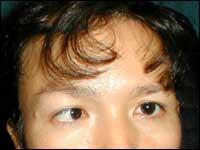
Esotropia before surgery Aligned eyes after surgery
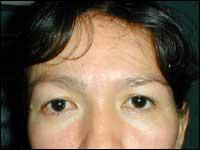
The following presentations depict the two ways in which strabismus surgery is performed: a loosening procedure (Muscle Recession) and a tightening procedure (Muscle Resection).
Strabismus Treatment Success Story
An attorney visited our office because she suffered from crossed eyes, and had been living with the condition her whole life. Her parents had been told that though strabismus could be fixed, the condition could manifest again later on in life. Consequently, they left it untreated and she was teased throughout her childhood.
When the attorney visited Eye Doctors of Washington, we were happy to offer her strabismus surgery and a chance at all of the benefits the procedure can provide. We explained that if the condition did re-emerge after treatment, we could simply fix it again. With just one procedure, her condition was improved – and after suffering from crossed eyes for 29 years, she finally had straight eyes.
Strabismus Surgery
Glasses, patches, prisms, eye exercises, and medications can all be used to successfully treat strabismus. However, when these more conservative forms of treatment are ineffective, surgery may be used to improve the condition. To improve or correct strabismus surgically, your doctor will balance the eyes by tightening weak muscles and loosening muscles that are too strong.
Eye muscle surgery is typically performed as an outpatient procedure. Before surgery, patients are administered a general anesthetic or a local anesthetic in conjunction with sedation. Patients with only one eye exhibiting symptoms of strabismus may still require surgery on both eyes in order to keep them balanced. Using data resulting from decades of scientific research, our eye surgeons know which muscles need to be adjusted and precisely how much to move each muscle depending on the specifics of your case.
After your procedure, you will have several follow up appointments to assess the success of the surgery. These appointments will take place the first week after surgery, 4-6 weeks later, and then once again after 4-6 months. Immediately after surgery, some patients may experience temporary double vision as the eyes adjust to their new position. In over 90% of patients, this double vision completely resolves within 4-6 weeks.
Eye muscle surgery completely corrects strabismus in approximately 80% of patients. For patients with strabismus that is not eliminated by eye muscle surgery, supplementary treatment methods or an additional procedure may be needed to fully resolve the condition and achieve straight eyes.
Contact Us
If you would like to learn more information about strabismus and eye muscle surgery, or to schedule a consultation, please contact us today.